
How to Take Probiotics Without Getting Bloated
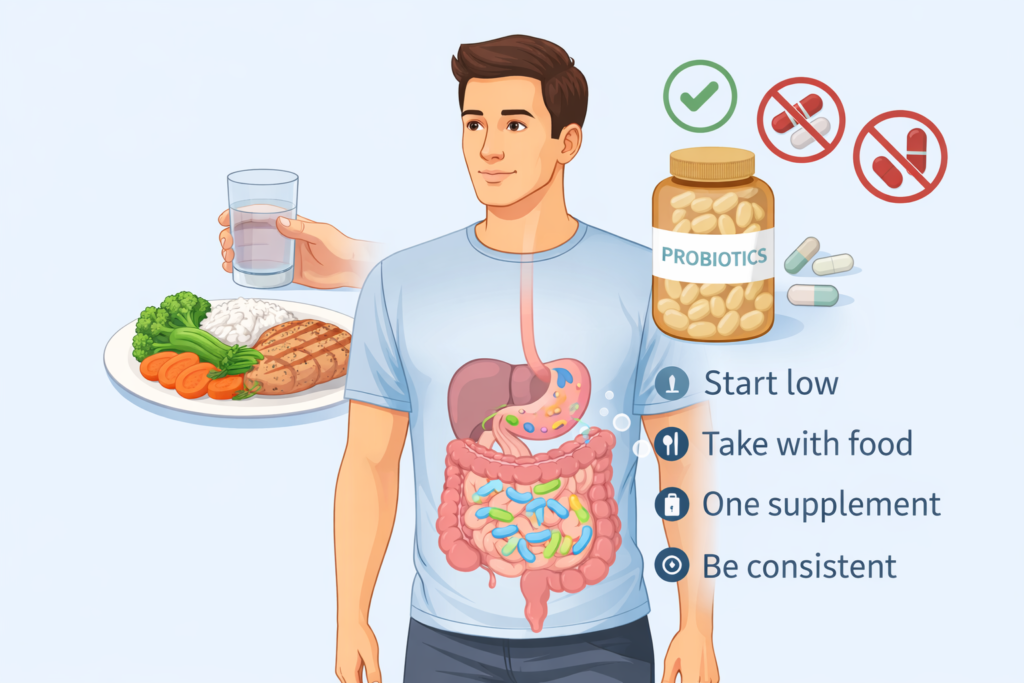
Many men try probiotics to improve digestion—only to feel more bloated instead. When that happens, it’s easy to assume the supplement itself is the problem.
In reality, bloating is often caused not by what probiotic you take, but how you take it. Small changes in timing, dosage, and consistency can make a noticeable difference in how your gut responds.
Most probiotic-related bloating in men is caused by introduction speed, timing, and consistency rather than the probiotic itself.
Key Takeaways
- How to take probiotics without getting bloated often depends on introduction, not product choice
- Starting low and staying consistent reduces digestive stress
- Taking probiotics with food is usually easier on the gut
- Avoid stacking multiple gut supplements during the adjustment phase
- This guide is part of our complete Men’s Bloating & Probiotics Guide, which connects causes, timing, and supplement strategies into a clear step-by-step path.
Why “How You Take It” Matters More Than the Product
Probiotics don’t work like painkillers or antacids. They interact with existing gut bacteria, and that interaction can temporarily increase fermentation before balance improves.
If probiotics are introduced too aggressively, the gut may respond with gas, pressure, or discomfort—even if the product itself is well-formulated.
This is why two men can take the same probiotic and have very different experiences—gut sensitivity, diet, and baseline bacteria all shape the response.
4 Steps to Take Probiotics Without Getting Bloated
These steps are designed to reduce digestive stress during the gut adjustment phase—not to mask symptoms.
1. Start Lower Than the Label Suggests
Many probiotics are labeled with doses designed for general use, not sensitive digestion.
Starting at a lower level allows the gut to adjust gradually. This helps reduce sudden fermentation spikes that often cause bloating.
Starting low doesn’t mean the probiotic is weaker—it means the transition is gentler.
2. Take Probiotics With Meals
Taking probiotics on an empty stomach can increase discomfort for some men.
When taken with food:
- Stomach acid is less harsh
- Bacteria pass through digestion more smoothly
- Gas-related symptoms are often reduced
Meals act as a buffer, making probiotics easier to tolerate during the early phase.
3. Stick to One Supplement at a Time
Combining probiotics with fiber supplements, digestive enzymes, or prebiotics can overload digestion—especially early on.
During the adjustment period:
- Use one probiotic only
- Avoid adding new gut-related supplements
- Let your body respond clearly to a single change
This makes it easier to tell what’s helping and what isn’t.
4. Be Consistent Instead of Switching Frequently
Stopping and restarting probiotics repeatedly can prolong bloating.
Consistency matters because gut bacteria adapt over time. Switching products too quickly can reset the adjustment process, keeping symptoms stuck in the “uncomfortable” phase.
If symptoms are mild and stable, steady use is often more effective than frequent changes.
Common Mistakes That Make Probiotic Bloating Worse
Men often experience bloating due to habits such as:
- Starting with very high CFU doses immediately
- Taking probiotics sporadically
- Switching brands every few days
- Adding multiple gut supplements at once
These behaviors increase digestive variability, making symptoms harder to interpret. Most of these issues come from changing too many variables at once.
How Long to Give It Before Judging Results
Probiotics rarely deliver instant results.
In many cases:
- Mild bloating appears in the first few days
- Symptoms stabilize within one to two weeks
- Improvement tends to be gradual rather than sudden
What matters most is the trend. If discomfort slowly eases or stops worsening, the gut may still be adjusting.
For a clearer timeline, see our guide on how long probiotic bloating typically lasts.
Most bloating issues improve not by changing products, but by changing how the product is introduced.
FAQ
Should men take probiotics in the morning or at night?
There’s no universal rule. Many men tolerate probiotics best when taken with their largest meal of the day. For timing details, see our guide on the best time to take probiotics for men.
Is it better to take probiotics every day?
Yes. Consistency helps gut bacteria adapt more smoothly.
Can skipping days reduce bloating?
Occasional breaks may help some people, but frequent skipping can delay adaptation.
Does bloating mean probiotics aren’t working?
Not necessarily. Temporary bloating can occur even when probiotics are ultimately beneficial.
When Bloating Should Be Checked
If bloating is severe, keeps worsening, or comes with red-flag symptoms (such as intense pain, fever, blood in stool, or unexplained weight loss), it’s safer to stop experimenting and speak with a healthcare professional.
This article is for informational purposes only and does not replace professional medical advice.
Conclusion
Avoiding bloating with probiotics often comes down to patience and approach—not finding a “perfect” product.
Starting slowly, taking probiotics with meals, and staying consistent allows digestion to adapt without unnecessary stress. For many men, these small adjustments are enough to turn an uncomfortable experience into a manageable one.
Understanding how to take probiotics without getting bloated makes digestive support feel less frustrating—and far more predictable.
If bloating has been frustrating or unpredictable, following the full framework in our Men’s Bloating & Probiotics Guide can help you connect timing, causes, and next steps more clearly.