
Probiotics vs Digestive Enzymes: Which Is Better for Bloating?
This guide compares probiotics vs digestive enzymes for bloating, explaining how each works and which option may suit different digestive patterns.
When bloating becomes a regular issue, many men turn to supplements for relief. Two of the most common options are probiotics and digestive enzymes—but choosing between them isn’t always straightforward.
Some men feel better with probiotics, while others only notice relief after trying digestive enzymes. This leads to a common question: which is actually better for bloating?
The answer depends less on the supplement itself and more on why bloating is happening in the first place.
This comparison is part of our complete Men’s Bloating & Probiotics Guide, which connects causes, timing, and supplement choices into a clear framework.
Understanding the Difference Between Probiotics vs Digestive Enzymes
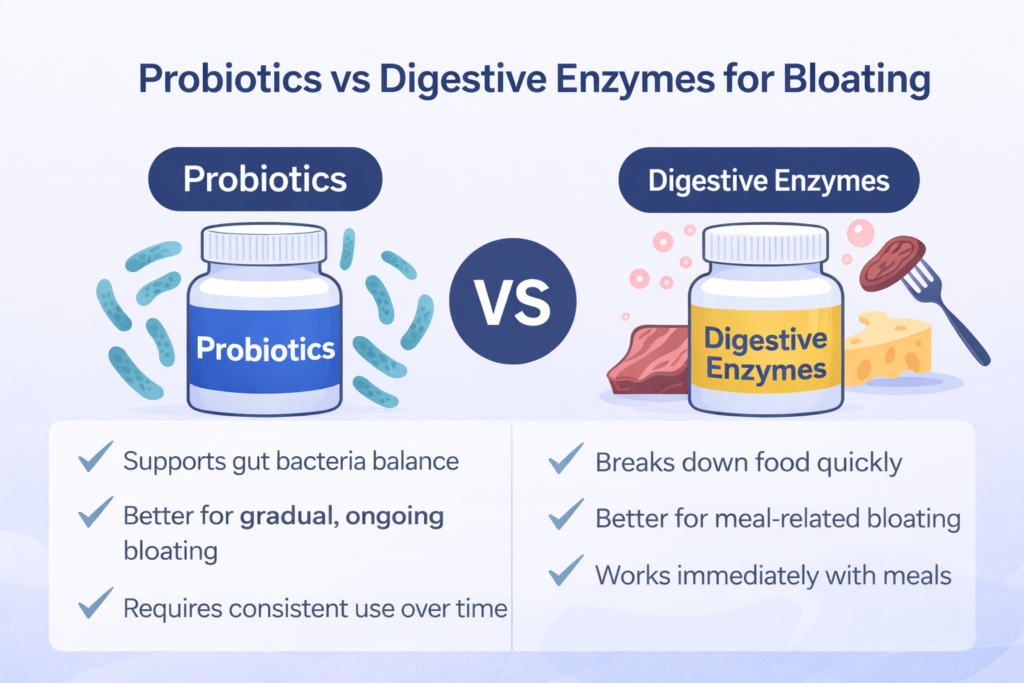
Although both supplements support digestion, they work in fundamentally different ways.
What Probiotics Do (The “Builders”)
Probiotics are live microorganisms designed to support balance in the gut microbiome. They don’t digest food directly. Instead, they influence how bacteria interact within the digestive system over time.
- Action: Biological (long-term balance)
- Best for: Bloating linked to gut bacteria imbalance
- Timeline: Gradual; often requires consistent use over weeks
Because they work by changing the gut environment, probiotics are not designed for immediate symptom relief.
What Digestive Enzymes Do (The “Breakdown Crew”)
Digestive enzymes are proteins that help break down carbohydrates, fats, and proteins during digestion.
- Action: Mechanical / chemical (immediate assistance)
- Best for: Bloating caused by incomplete food breakdown
- Timeline: Acts during or shortly after meals
Enzymes do not alter gut bacteria. Their role is purely to help digestion happen more efficiently.
Probiotics vs Digestive Enzymes for Bloating: Comparison Table
| Feature | Probiotics | Digestive Enzymes |
|---|---|---|
| Primary role | Balance gut microbiome | Break down food |
| How they work | Biological | Mechanical |
| When to take | Daily, consistently | With meals |
| Effect timeline | Days to weeks | Immediate |
| Best for | Ongoing bloating | Post-meal bloating |
When Probiotics May Be the Better Option
Probiotics are often more suitable when bloating feels persistent and unrelated to specific meals.
You may benefit from probiotics if bloating is associated with:
- Recent antibiotic use or recovery from illness
- Irregular bowel movements
- General digestive discomfort throughout the day
It’s also common for probiotics to cause temporary bloating during the adjustment phase, which we explain in more detail in our guide on whether probiotics can make bloating worse before it gets better.
When Digestive Enzymes May Be the Better Option
Digestive enzymes tend to work best when bloating is clearly food-triggered.
They may be more helpful if bloating:
- Appears within an hour after eating
- Is linked to specific foods (dairy, beans, heavy meals)
- Feels like food is “sitting” in the stomach
In these cases, the issue is often digestion efficiency rather than gut bacteria balance.
Can Probiotics and Digestive Enzymes Be Used Together?
Some men use both, but combining them without a clear plan can create confusion.
A practical approach:
- Test one first: Use either probiotics or enzymes alone for 1–2 weeks
- Observe response: Identify what actually improves symptoms
- Avoid stacking too early: Multiple supplements can mask what’s working
Because men respond differently to gut supplements, understanding why probiotics affect men differently helps avoid unnecessary trial and error.
How to Choose Without the Frustration
Instead of guessing, observe your symptoms and ask:
- Does bloating happen regardless of meals? → Probiotics
- Does bloating disappear when skipping a meal? → Enzymes
- Is discomfort accompanied by fatigue or brain fog? → Gut balance issue
Clear patterns usually point toward the more appropriate option.
FAQ
Are probiotics vs digestive enzymes for bloating equally effective?
Neither is universally better. Probiotics support long-term gut balance, while digestive enzymes help with immediate food digestion.
Can digestive enzymes cause bloating?
It’s uncommon. If bloating occurs, the enzyme blend may not match your diet.
Should men try probiotics or enzymes first?
Men with ongoing, non-meal-related bloating often try probiotics first. Men with meal-triggered bloating often start with enzymes.
Conclusion
Choosing between probiotics vs digestive enzymes for bloating isn’t about finding a superior supplement—it’s about matching the solution to the cause.
Probiotics support long-term gut stability. Digestive enzymes provide targeted, meal-time support. Understanding this distinction helps men avoid unnecessary supplement cycling and approach digestion more strategically.
If you want to see how this decision fits into the bigger picture, follow the full framework in our Men’s Bloating & Probiotics Guide.