
Do Probiotics Cause Bloating? What Men Should Know
You start taking probiotics to improve digestion—but instead of feeling better, your stomach feels more bloated than usual. This leads many men to ask a common question: do probiotics cause bloating, especially in the first few days?
The short answer is yes, they can—but the reason matters.
In many cases, bloating is temporary and related to how the gut adjusts to new bacteria, not a sign that probiotics are harmful.
Key takeaways:
- Probiotics can cause temporary bloating in some men
- Bloating usually improves within days or weeks
- Strain type, dosage, and timing all matter
- Persistent bloating may signal a mismatch—not a universal problem
Why Probiotics May Cause Bloating
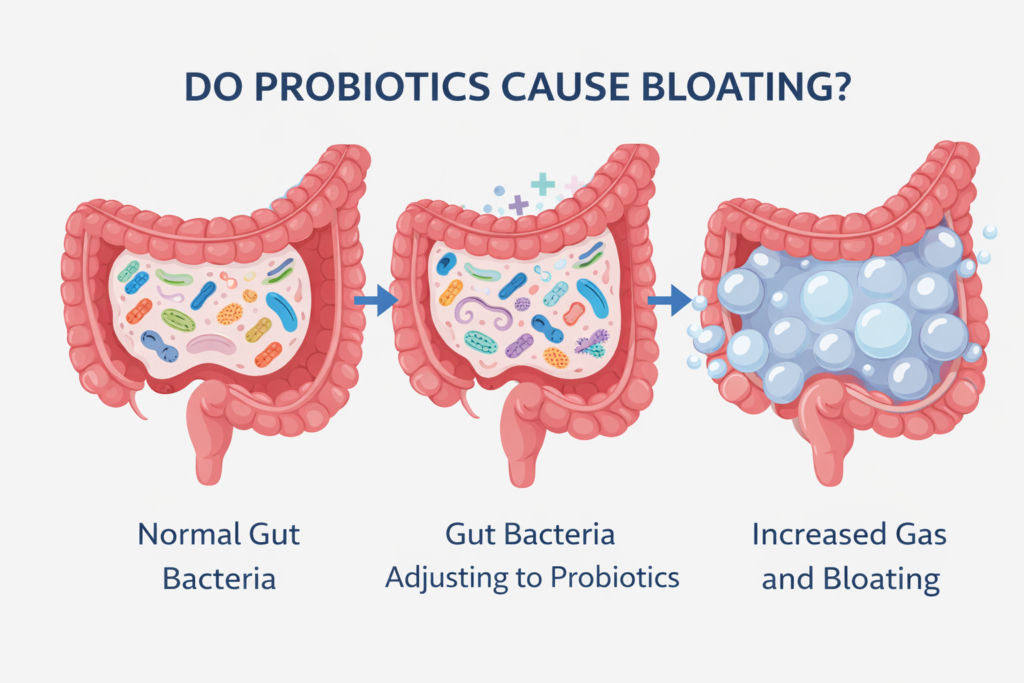
This temporary bloating phase is part of the gut’s adjustment process, which we explain further in our Men’s Bloating Guide.
Probiotics introduce new bacteria into your digestive system. When these bacteria interact with existing gut microbes, digestive activity can temporarily increase.
One common effect is increased gas production. As bacteria ferment fibers and other compounds in the gut, gas can build up—leading to bloating or pressure.
This doesn’t mean something is “wrong.” It often reflects a shift in gut balance as your system adapts.
How Long Does Probiotic Bloating Last?
In most cases, probiotic-related bloating is short-lived.
For many men, symptoms ease within a few days to a couple of weeks. The adjustment period varies depending on the probiotic strain, starting dose, and overall gut sensitivity.
Some men notice improvement quickly, while others need more time before digestion feels normal again.
Factors That Increase Bloating in Men
Certain habits and product choices can make bloating more likely:
- Starting with a high dose
- Strains that increase fermentation activity
- Taking probiotics on an empty stomach
- Existing gut sensitivity or irregular digestion
Understanding these factors helps explain why probiotics cause bloating in some men but not others.
What Men Can Do to Reduce Bloating
Small adjustments often make a noticeable difference:
- Start low, go slow – increase dosage gradually
- Take probiotics with meals – food buffers digestive reactions
- Give it time – mild bloating can be part of adjustment
- Choose strain-specific formulas when possible
When Bloating May Be a Sign to Stop
If bloating feels intense, worsens over time, or continues well beyond the initial adjustment period, it may signal that the probiotic isn’t a good fit.
Rather than assuming all probiotics are the problem, pausing use or reassessing your approach is often the smarter move.
FAQ
Can probiotics make bloating worse at first?
Yes. Temporary bloating can occur during early gut adjustment.
Should men stop probiotics if bloating continues?
If discomfort persists or interferes with daily life, stopping or switching may be reasonable.
Are certain probiotic strains better for bloating?
Some strains are formulated for digestive comfort, but responses vary by individual.
Conclusion
Short-term bloating does not automatically mean probiotics are bad for you. For many men, it’s part of the gut’s adjustment process—not a negative outcome.
Starting with a lower dose, taking probiotics with meals, and allowing time for adaptation can reduce discomfort. Paying attention to how your body responds is key.
👉 This article is part of our complete Men’s Bloating & Probiotics Guide, where we break down causes, timelines, usage strategies, and how to choose the right supplement based on your symptoms.
Explore the full guide here:
https://mensdailystate.com/mens-bloating-guide/